Electric vehicles (EVs) are no longer just consumers of energy, they can also act as distributed energy resources. By integrating EVs into the grid, cities and utilities can create a smarter, more responsive energy ecosystem.
Modern EVs, autonomous vehicles (AVs), and urban transit systems have the potential to become part of a highly intelligent, bidirectional urban grid. Unlike conventional charging, V2G allows vehicles not only to draw power from the grid but also to store and discharge energy back when it’s needed most.
Currently, most EVs are idle or fully charged when the grid could benefit from their stored energy. V2G bridges this gap, making EV batteries a distributed source of electricity for peak demand periods, emergency supply, or grid stabilization.
Bidirectional wireless charging solves the access problem for V2G. Whenever a vehicle is parked over a wireless charging pad, it can automatically participate in V2G operations, without any driver intervention. By creating a network of vehicles that can intelligently charge or discharge, cities can:
This approach turns parked EVs into a massive, decentralized energy storage system, enabling more flexible and resilient urban energy management.
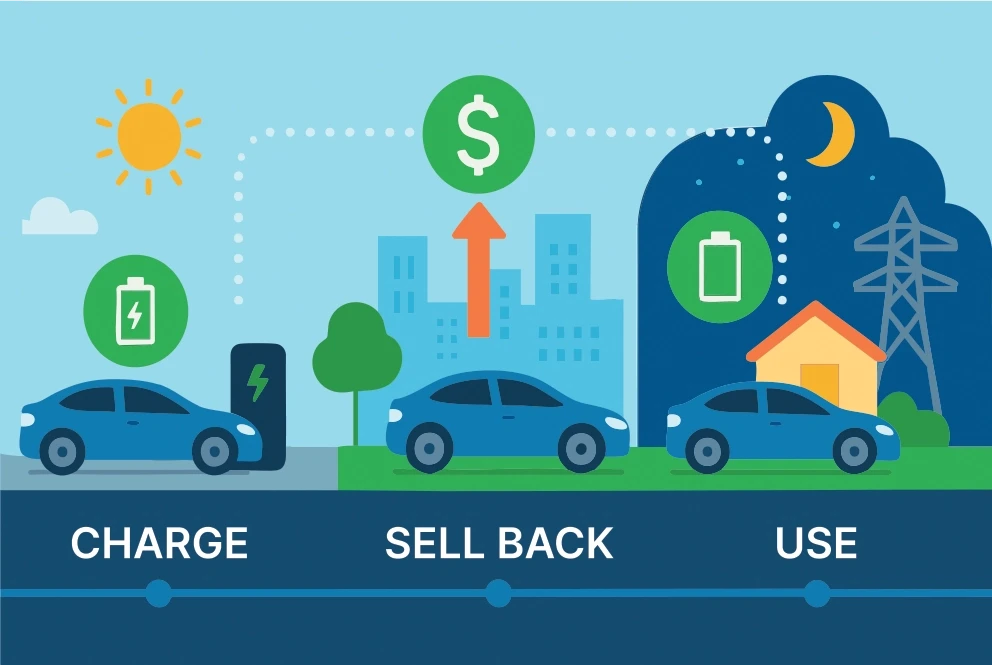
Energy arbitrage is the practice of storing electricity when prices are low and using or selling it when prices are high. When paired with V2G-capable EVs, energy arbitrage unlocks significant financial and operational benefits for both consumers and utilities.
How it works: